Goya’s monsters are not imaginary—they are the shape society takes when reason begins to fail.
Gallery
View the selected works of Francisco de Goya here:
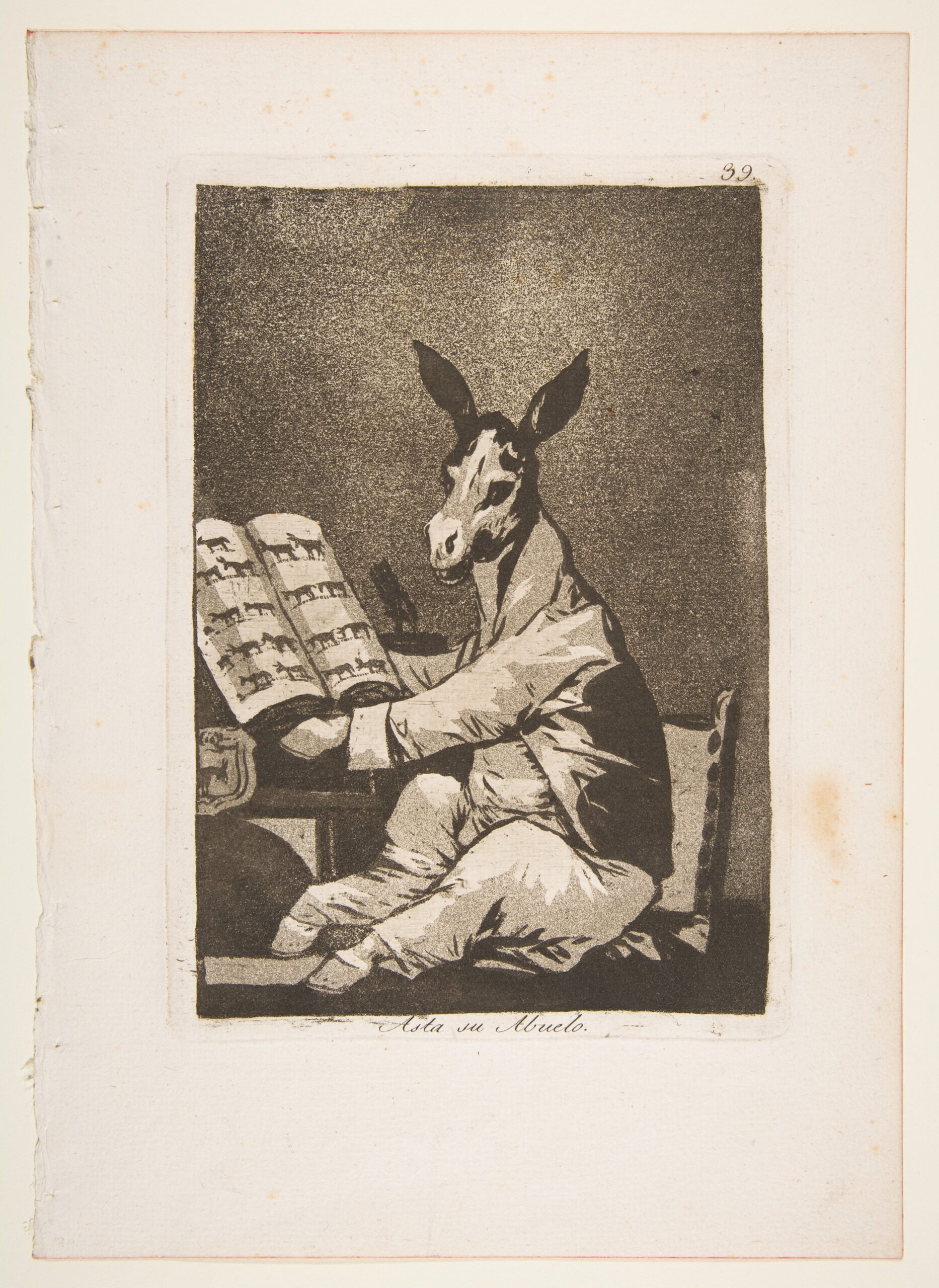
In this print, Goya turns inherited status into something ridiculous. A donkey sits upright, carefully studying a book of ancestry as if he has discovered proof of his own importance. At first, the image feels almost funny because the animal behaves with such seriousness. However, the humor quickly becomes sharper. Goya is not only making fun of one foolish character. He is criticizing a society that gives power and respect to people because of family name rather than intelligence, kindness, or ability. The donkey’s pride makes the image absurd, but also uncomfortable. It suggests that nobility can become a performance, something repeated and protected even when there is nothing meaningful behind it. In this exhibition, the print shows that monstrosity does not always look supernatural. Sometimes, it looks like social respectability pretending to be truth.
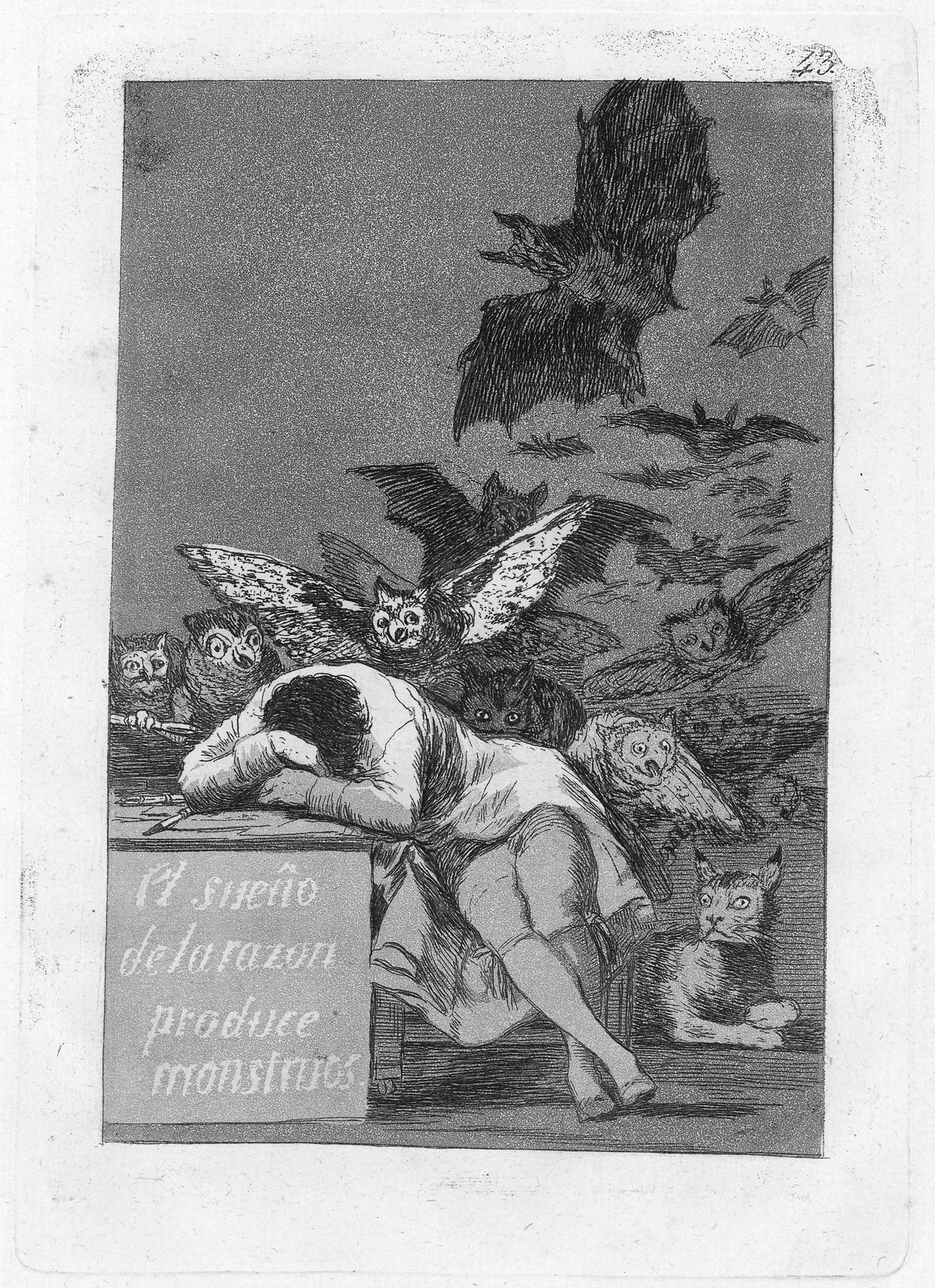
This is the central image of the exhibition. A figure slumps over a desk, asleep or exhausted, while owls, bats, and shadowy creatures gather around him. The scene feels like a nightmare, but it also feels strangely quiet. Goya does not show a violent attack. Instead, the monsters appear because the figure has withdrawn from reason and awareness. The title suggests that when reason sleeps, irrationality begins to take shape. However, the print is not simply saying that imagination is bad. Goya uses imagination to reveal a truth about human life. The monsters are invented, but the fears they represent are real. They stand for superstition, ignorance, confusion, and the darker thoughts people try to ignore. In this exhibition, plate 43 acts almost like a warning: when people stop questioning the world around them, monsters are allowed to grow.
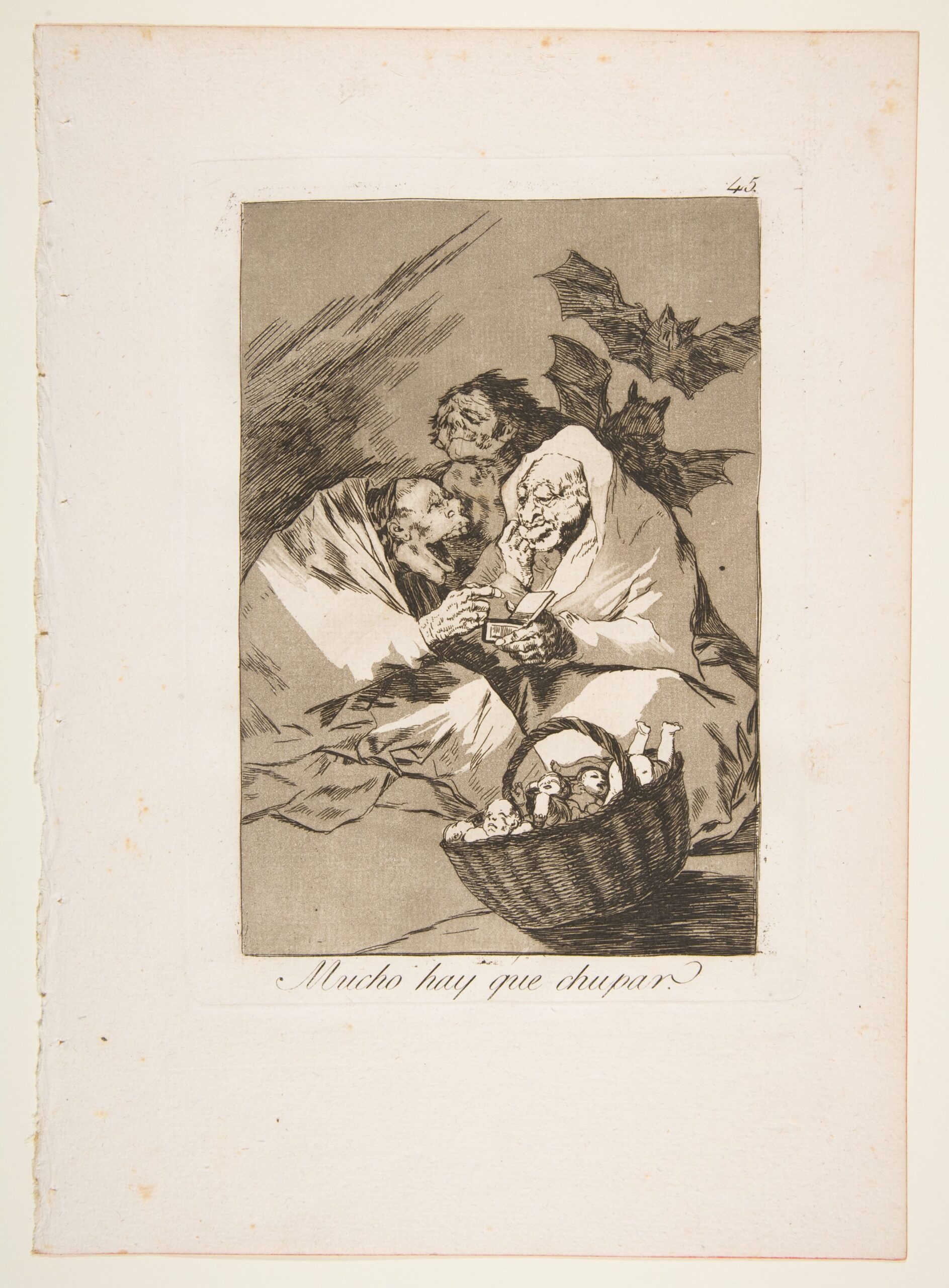
This print is one of the most disturbing images in the exhibition. Three old women gather in a dark space, surrounded by bats and a basket filled with dead infants. The scene has often been connected to witches, vampires, and superstitious fears about child sacrifice. Goya makes the image difficult to look at, but the horror is not only in the subject matter. It is also in the casualness of the figures. They do not seem shocked by what surrounds them. Instead, they appear almost ordinary, as if this terrible act belongs to a familiar routine. That is what makes the print so unsettling. Goya shows superstition not as harmless belief, but as something that can become violent and predatory. The title suggests consumption, but the image pushes that idea further. This is a world where the vulnerable are used up by those with power.
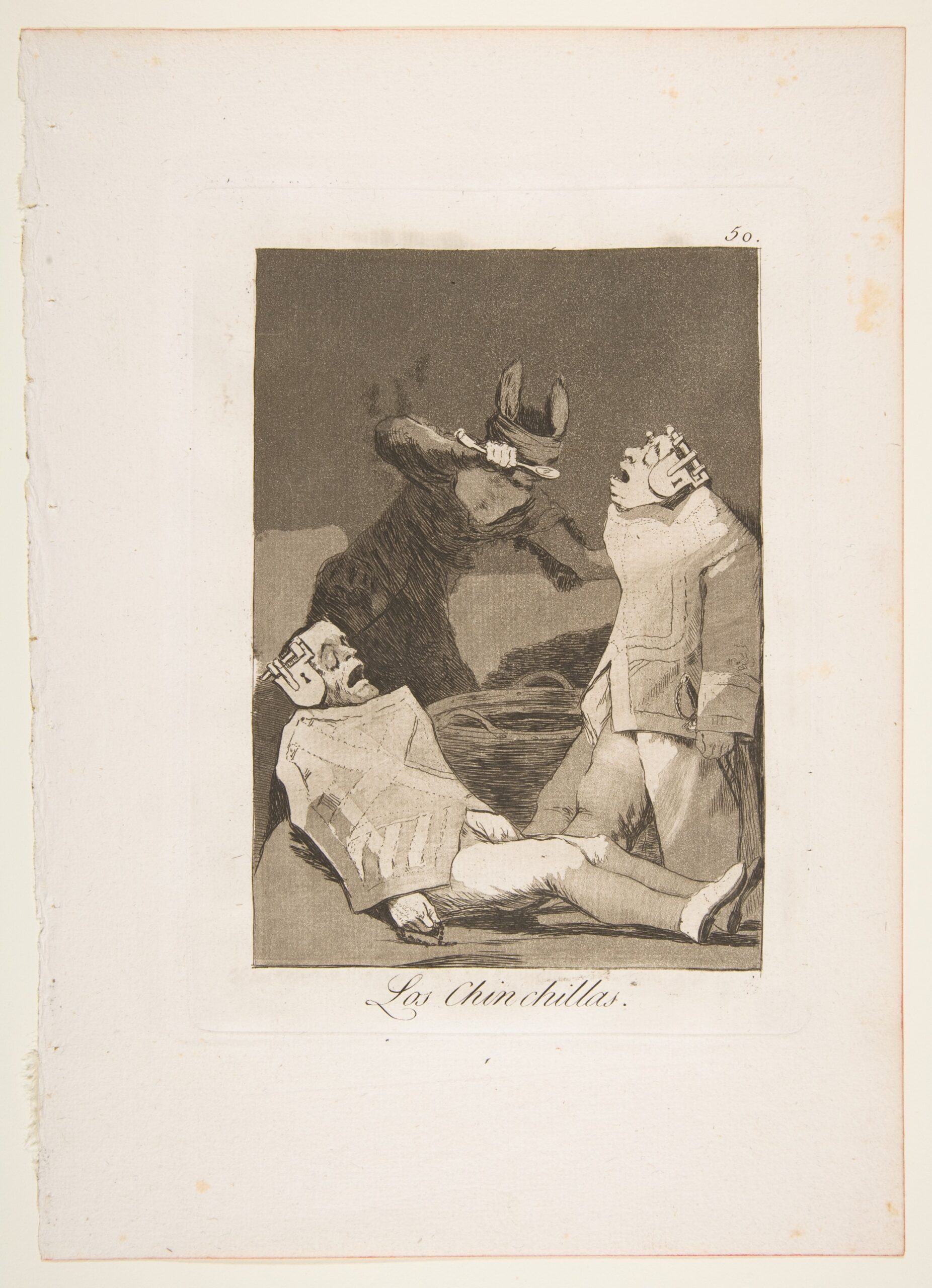
In The Chinchillas, Goya shows two stiff, helpless figures sitting with closed or empty expressions while another figure feeds them. Their bodies seem trapped inside heavy clothing or strange restraints, making them look less like active people and more like objects. The image feels absurd, but also deeply uncomfortable. These figures appear to have given up the ability to think or act for themselves. They are dependent, passive, and almost hollow. Goya uses their distorted bodies to criticize a society where people can become mentally and morally inactive. The print connects closely to the exhibition’s larger argument because the figures are not supernatural monsters. Their monstrosity comes from emptiness and dependence. They show what happens when people stop using reason and allow themselves to be carried by habit, privilege, or ignorance. Goya makes stupidity feel physical, as if it has taken over the body.
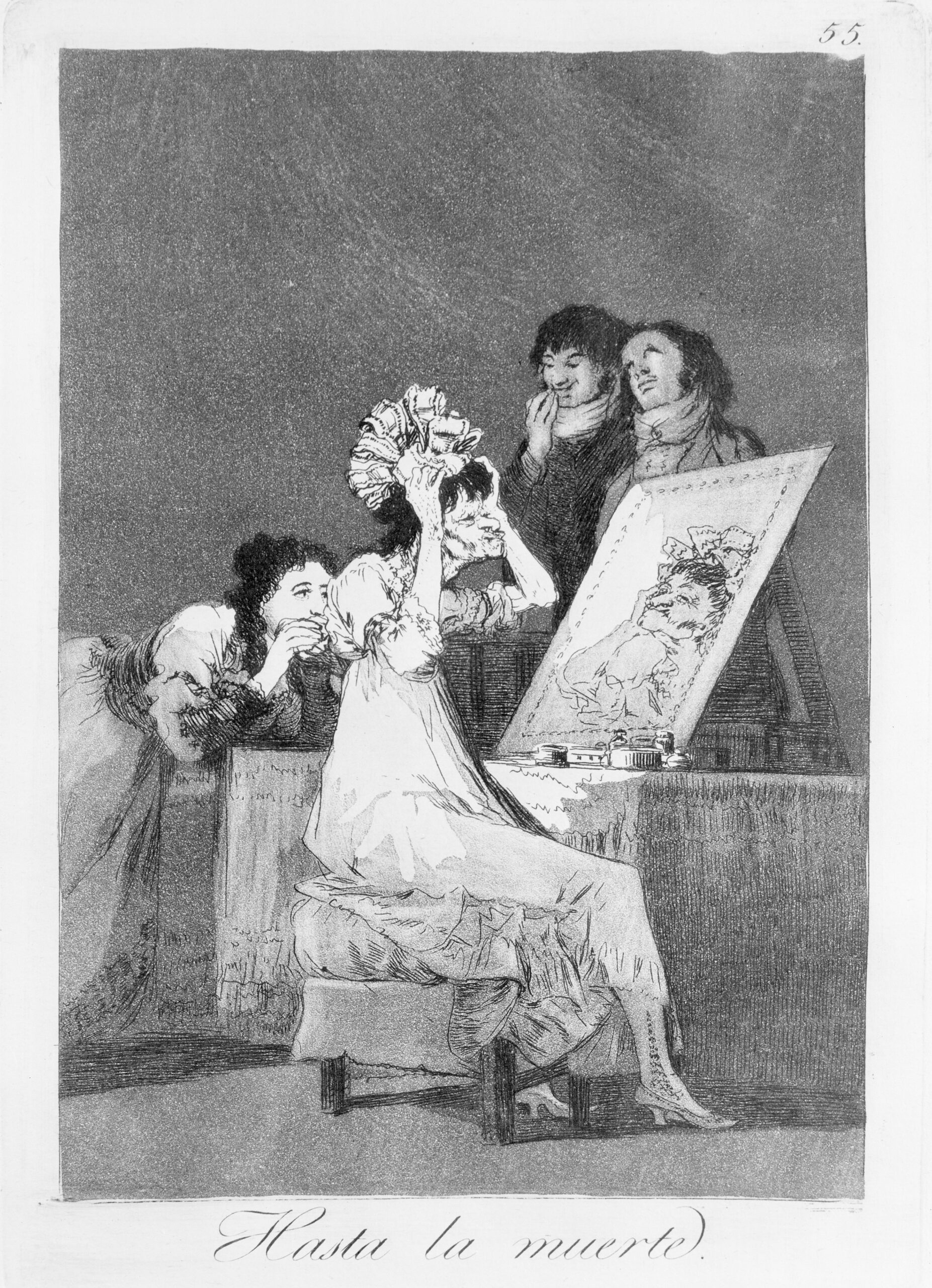
In this print, an elderly woman looks at herself while continuing to perform beauty and desirability. At first, the image may seem like a simple joke about vanity. Goya shows her surrounded by figures who watch as she clings to an image of youth that no longer fits her. However, the longer one looks, the sadder the scene becomes. The woman is not only ridiculous. She is trapped by the expectations of appearance. Goya criticizes a culture that teaches people to value surfaces so deeply that they continue performing them “until death.” The horror here is quiet. There are no witches, bats, or monsters, but there is still something unsettling about the image. It shows a person unable to let go of a false version of herself. In the context of this exhibition, vanity becomes another form of irrationality.
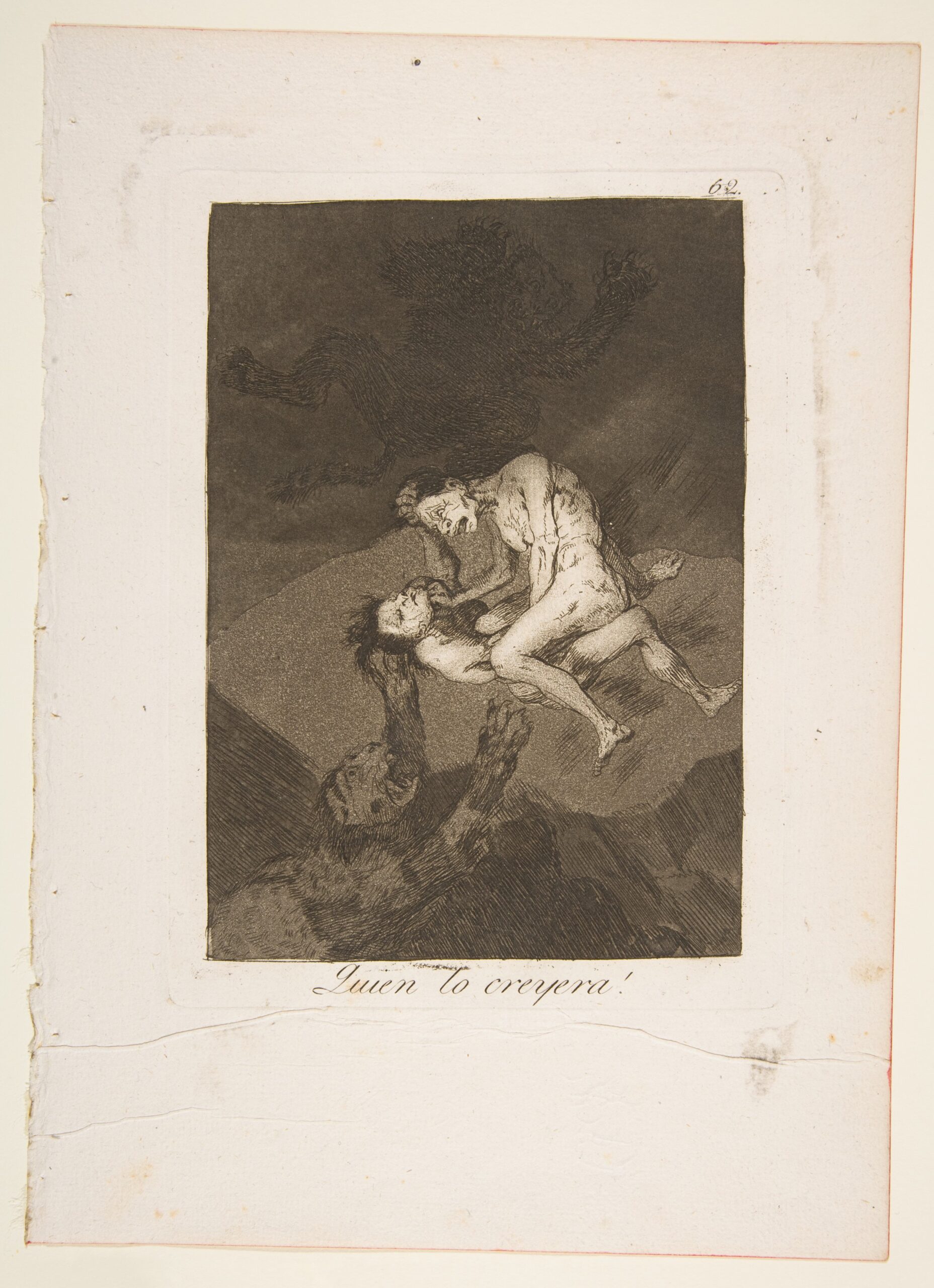
This print moves fully into the world of witchcraft and nightmare. Two figures appear caught in a strange struggle, their bodies tangled and suspended in darkness. The title, Who would have thought it?, adds to the uncertainty. It does not explain the scene clearly, but instead makes it feel more mysterious. Goya often used witches and supernatural figures to criticize superstition, ignorance, and hidden forms of corruption. Here, the body itself becomes unstable. The figures twist together in a way that feels both physical and symbolic, as if irrationality has pulled them out of normal human order. The darkness surrounding them makes the scene feel private and secretive, like something discovered by accident. In this exhibition, the print shows how Goya uses fantasy to reveal social fear. The scene may look impossible, but the emotions behind it—violence, confusion, and disbelief—feel very real.
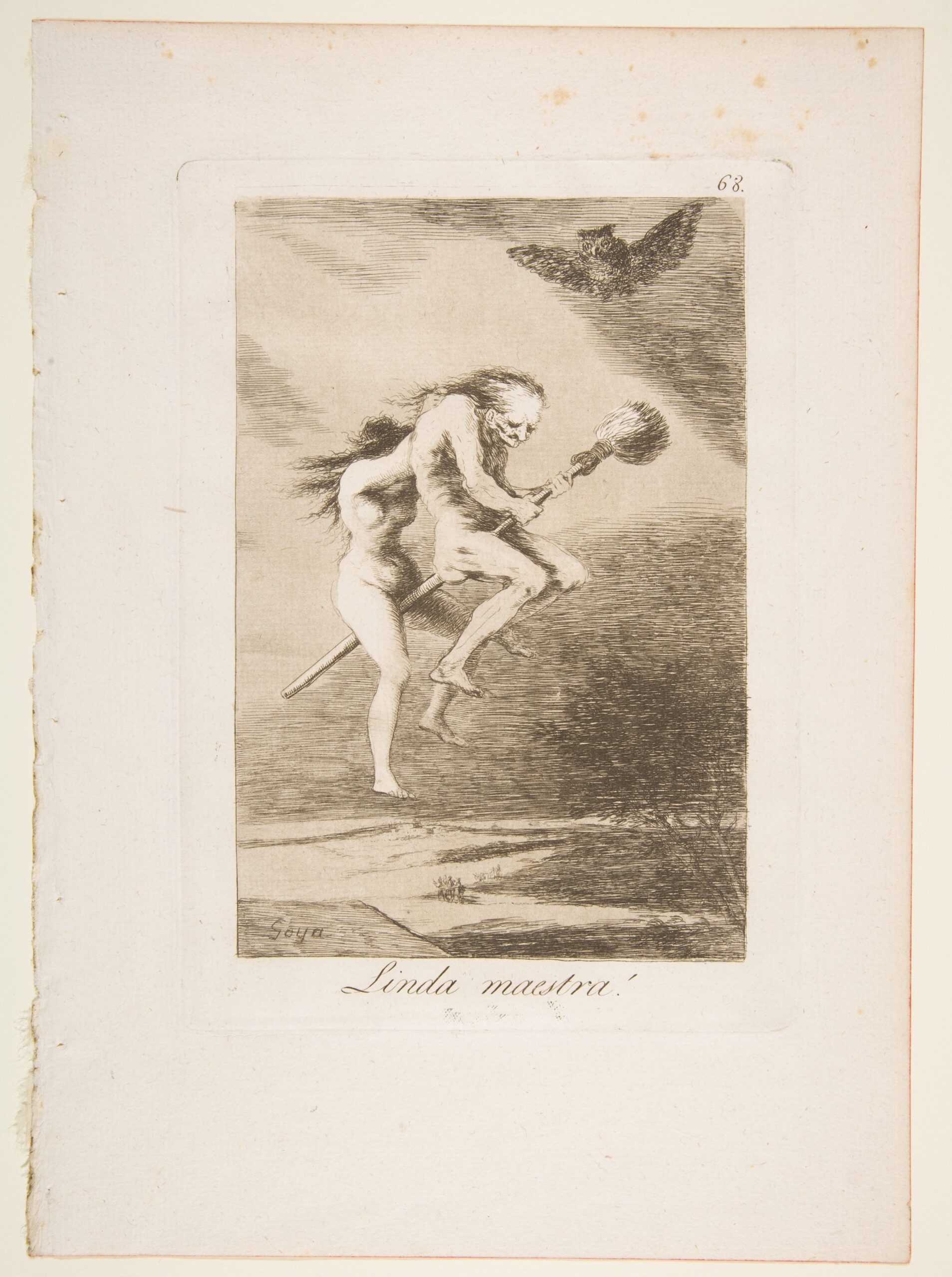
In Pretty teacher!, Goya shows one figure guiding another through the air, suggesting a lesson in witchcraft. The title sounds playful, but the image is darker than the words first suggest. A “teacher” usually represents learning and guidance, but here education has been twisted into something dangerous. The older figure seems to pass down irrationality rather than knowledge. This makes the print especially important to the exhibition’s theme. Goya is not only showing superstition as an individual problem. He suggests that false beliefs can be taught, repeated, and inherited. The younger figure does not simply invent this world alone; she is brought into it by someone else. The image becomes a disturbing version of education, where darkness is handed from one generation to the next. Goya turns the idea of instruction into a warning about how societies preserve their own illusions.
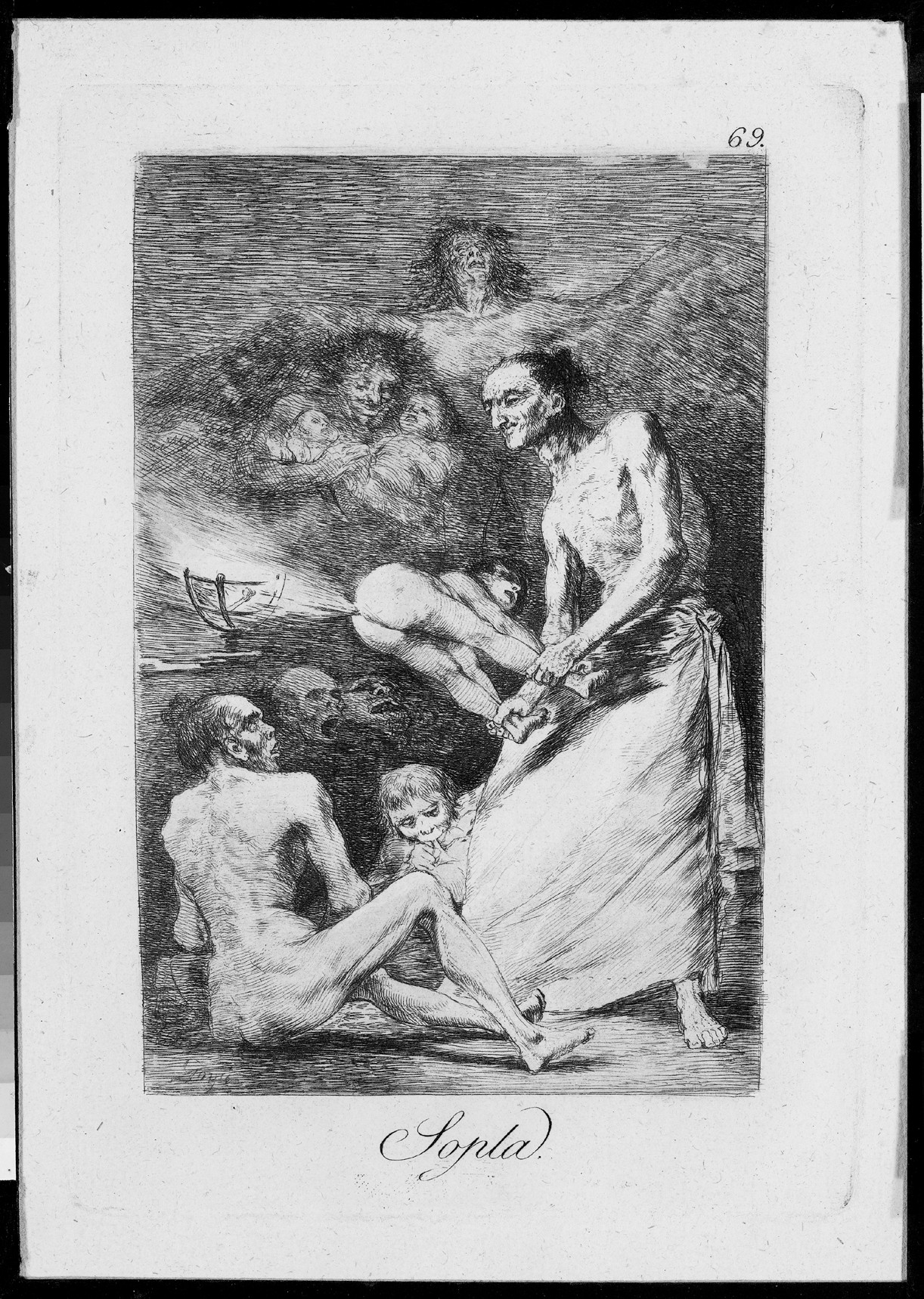
Blow is one of the most physically disturbing plates in the exhibition. An emaciated figure holds a child upside down, using the child’s body in a grotesque ritual. Other figures gather nearby, and the dark tones make the scene feel secretive and enclosed. The image suggests witchcraft, but it also points toward something more human and more horrifying: the exploitation of the powerless. Goya does not allow the viewer to distance themselves from the scene by treating it as pure fantasy. The child’s body makes the violence feel immediate. This is not just a monster in the dark. It is a world where the vulnerable are handled like tools. The print connects superstition with abuse, showing how irrational beliefs can become excuses for cruelty. In this exhibition, Blow makes visible the point where fantasy, violence, and social corruption collapse into one another.
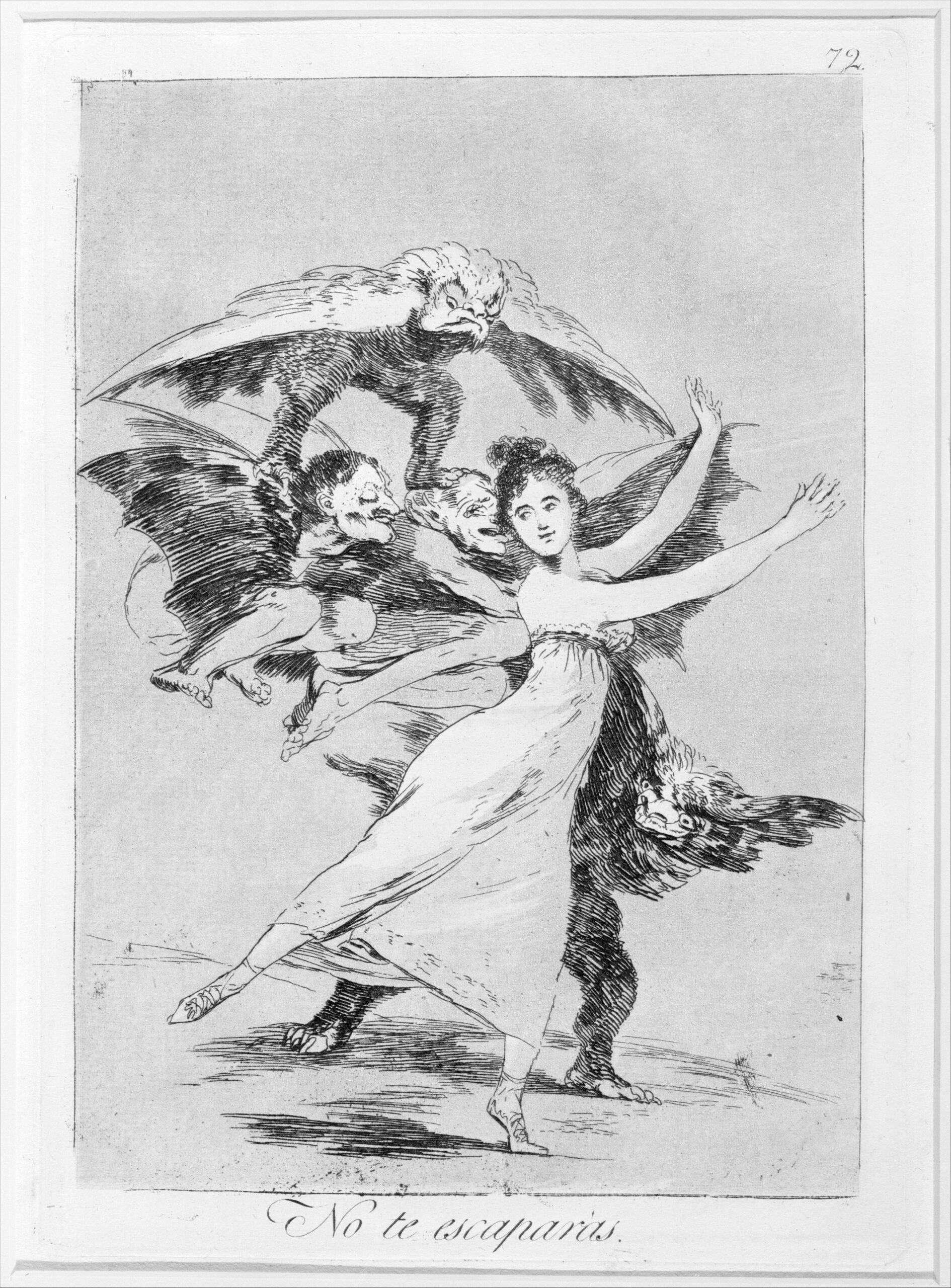
The title of this print already feels like a threat. You will not escape places the viewer inside a world where danger has already closed in. A woman appears surrounded by strange flying creatures, caught in a moment of pursuit or capture. The exact story remains unclear, but that uncertainty is part of the fear. Goya does not give a simple explanation. Instead, he creates the feeling of being trapped by forces that are both outside and inside human society. The creatures can be read as supernatural, but they also suggest gossip, desire, punishment, or social control. The woman’s vulnerability makes the scene especially tense. In the context of this exhibition, the print shows irrationality as something that hunts and surrounds people. Escape seems impossible because the danger is not only physical. It is also cultural, psychological, and moral.
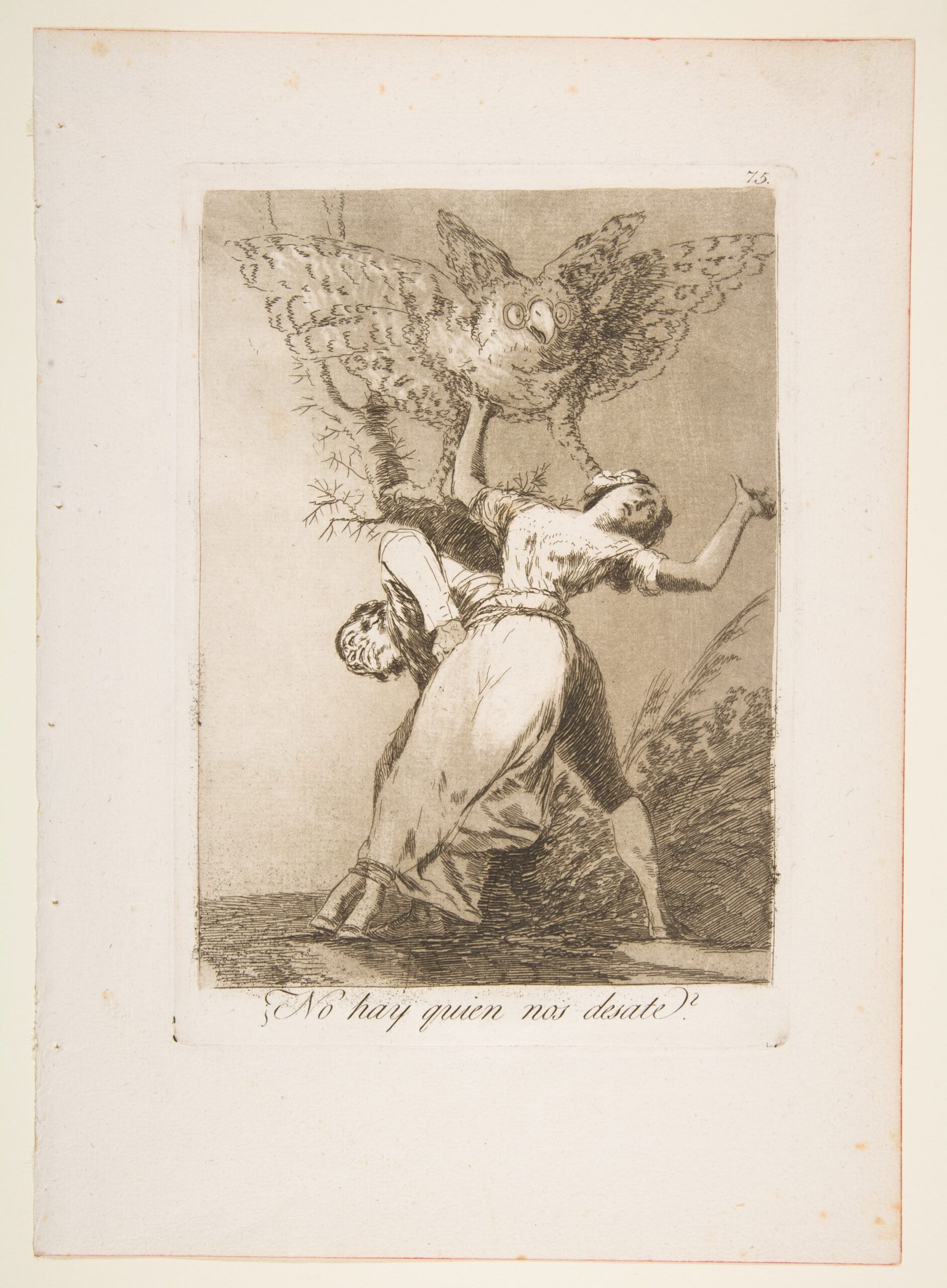
In this print, two figures are tied together so tightly that they seem unable to move freely or separate from one another. The title asks a desperate question: Is there no one to untie us? Goya turns bondage into an image of social and psychological entrapment. The figures may represent people trapped by relationships, institutions, superstition, or their own choices. What makes the image powerful is that the binding feels both literal and symbolic. They are physically connected, but they also seem trapped in a larger condition they cannot escape. The print fits the exhibition’s theme because it shows irrationality not as a single mistake, but as a structure that holds people in place. Goya leaves the question unanswered. No rescuer appears. The viewer is left with the uncomfortable feeling that the figures may remain bound because society has accepted their condition as normal.
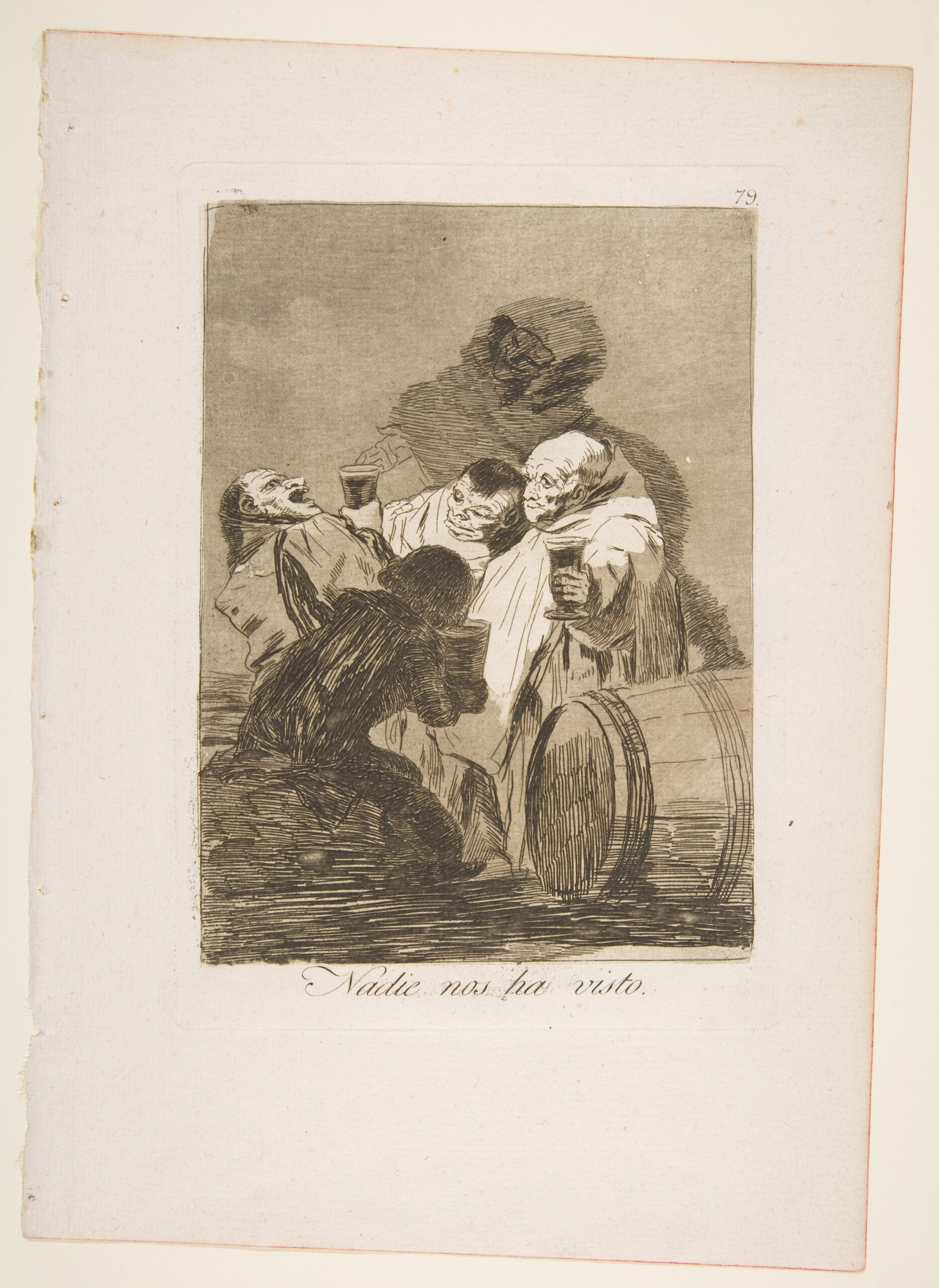
In No one has seen us, Goya presents secrecy as its own kind of darkness. The figures appear gathered in a hidden act, confident that they are unseen. The title gives the scene an uneasy intimacy, as if the viewer has interrupted something that was meant to remain private. Goya often exposes the gap between public respectability and private behavior, and this print fits directly into that concern. The figures are not frightening because they look like monsters in the usual sense. They are frightening because they believe concealment protects them. The darkness of the aquatint becomes part of the meaning, surrounding the figures with moral uncertainty. In this exhibition, the print shows how irrationality survives when it is hidden from view. Goya suggests that secrecy allows corruption to continue, not because nobody is harmed, but because nobody is supposed to notice.
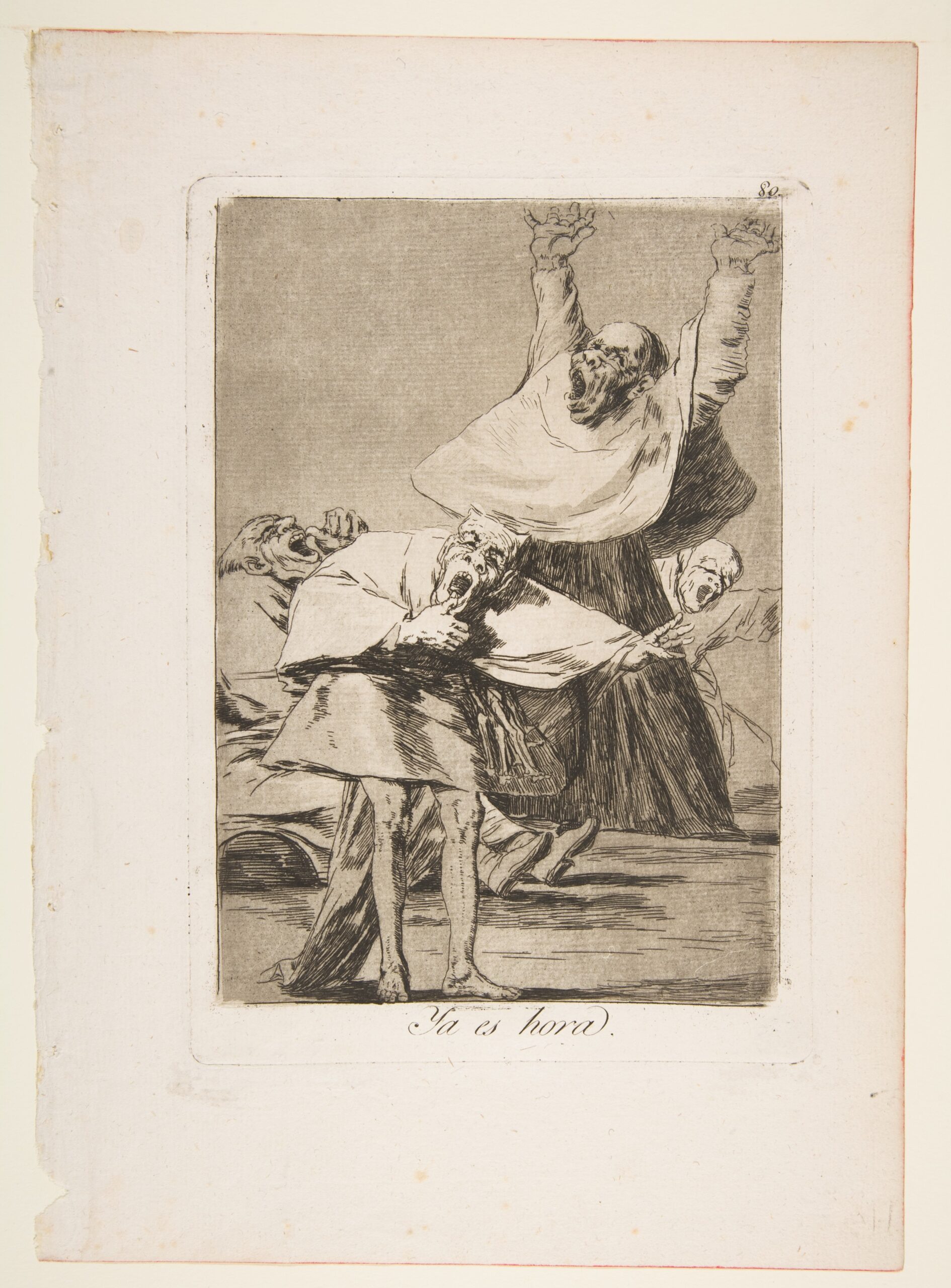
As the final plate of Los Caprichos, It is time feels like both an ending and a warning. Four robed men stretch and yawn, as if waking from sleep. The figures have been connected to Goya’s criticism of corrupt clergy, and their exaggerated bodies make them appear both human and monstrous. After a series filled with witches, fools, animals, and distorted bodies, Goya ends with figures who seem almost ordinary in comparison. That is part of what makes the image powerful. The nightmare does not end with a supernatural creature. It ends with people in positions of authority beginning to wake up. The title can be read in more than one way. It may be time for them to rise, but it may also be time for their actions to be exposed. Goya closes the series by reminding the viewer that the most dangerous monsters can be social ones.
Email us at [email protected] so we can respond to your questions and requests. Please email from your CUNY email address if possible. Or visit our help site for more information: